

How Fraud Detection Improves Online Survey Data
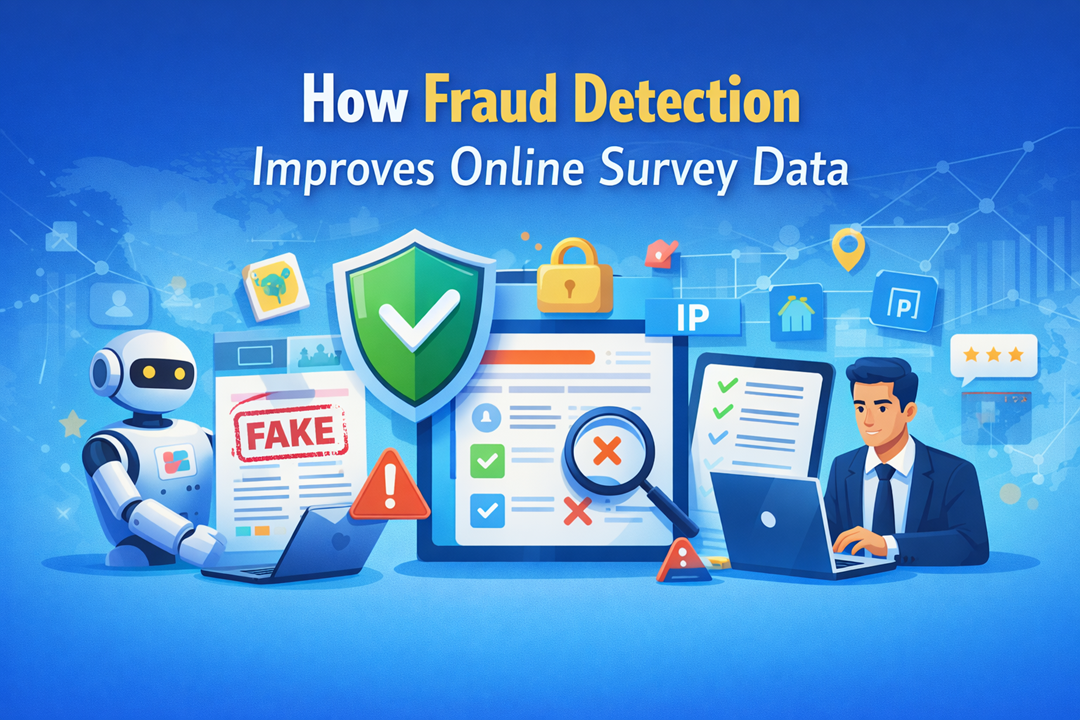
Online surveys are widely used by businesses, research agencies, and marketers to gather valuable insights from customers and target audiences. However, the accuracy of survey results depends heavily on the quality of responses collected. One of the biggest challenges in online research is survey fraud, where participants provide fake, duplicate, or careless responses just to complete surveys quickly.
Fraud detection plays a critical role in maintaining the integrity of survey data. By identifying suspicious behavior and removing invalid responses, fraud detection systems help researchers collect reliable and meaningful insights. For market research agencies such as MRBuddies, implementing strong fraud detection measures ensures that survey data remains trustworthy and useful for decision-making.
In this article, we explore how fraud detection improves online survey data, the common types of survey fraud, and the best techniques used to prevent it.
What is Survey Fraud?
Survey fraud occurs when respondents manipulate the survey process to earn incentives or complete surveys without providing genuine answers. Fraudulent responses can significantly distort research findings and lead to incorrect business decisions.
Some respondents may rush through surveys without reading questions, while others may use automated tools or bots to submit multiple responses. These behaviors reduce data accuracy and make it difficult for researchers to trust survey results.
This is why fraud detection tools and verification systems have become an essential part of modern online survey platforms.
Common Types of Survey Fraud
Understanding the types of survey fraud is the first step toward preventing it. Several fraudulent practices commonly occur in online surveys.
Duplicate Responses
Some participants attempt to complete the same survey multiple times using different email addresses or devices to earn additional rewards.
Bot Responses
Automated scripts or bots can be used to fill out surveys quickly without human interaction. These responses often follow patterns that can be detected through fraud detection algorithms.
Speeding
Speeding happens when respondents complete a survey far faster than the expected time, indicating that they likely did not read or consider the questions carefully.
Straight Lining
Straight lining occurs when respondents select the same answer option repeatedly across multiple questions without considering the actual content.
Inconsistent Answers
Some fraudulent respondents provide contradictory answers in different sections of the survey, showing that they are not responding honestly.
Why Fraud Detection is Important for Online Surveys
Fraud detection helps protect the accuracy and reliability of research data. Without proper fraud prevention systems, surveys may contain large amounts of low-quality responses.
Ensures Data Accuracy
By filtering out fraudulent responses, researchers can focus on genuine participant feedback.
Improves Research Quality
Clean and reliable data leads to better insights and more accurate business strategies.
Protects Survey Budgets
Fraudulent respondents often participate only for incentives, which increases research costs. Fraud detection helps prevent wasted incentives.
Enhances Client Trust
For agencies like MRBuddies, delivering high-quality and validated survey data strengthens client confidence and credibility.
Key Fraud Detection Techniques in Online Surveys
Modern survey platforms use multiple techniques to detect and prevent fraudulent responses.
IP Address Monitoring
Survey systems track IP addresses to identify duplicate responses coming from the same location. If multiple submissions are detected from a single IP address, they can be flagged for review.
Device Fingerprinting
Device fingerprinting collects information about the respondent’s device, browser, and operating system. This helps identify duplicate users even if they attempt to hide their identity.
Attention Check Questions
Attention checks are simple questions inserted into surveys to verify whether respondents are paying attention. For example, a question might ask participants to select a specific answer option.
Response Time Analysis
Survey platforms measure the time taken to complete each question or the entire survey. Responses that are significantly faster than average can be flagged as suspicious.
Geo-Location Verification
Some fraud detection systems verify whether respondents are located in the target geographic region required for the survey.
CAPTCHA Verification
CAPTCHA tools help prevent bots from automatically filling out surveys by requiring human verification before submission.
How MRBuddies Maintains High-Quality Survey Data
For professional research companies like MRBuddies, fraud detection is an important part of delivering reliable market research.
MRBuddies uses advanced survey quality control techniques such as:
-
Respondent verification and screening
-
Duplicate response detection
-
Attention check questions
-
Response time monitoring
-
Panelist behavior tracking
These practices help ensure that clients receive accurate, high-quality survey data that can support important business decisions.
Benefits of Fraud Detection in Market Research
Implementing strong fraud detection measures offers several benefits for organizations conducting online surveys.
Better Data Reliability
Researchers can trust the insights derived from survey responses.
Higher Response Quality
Fraud detection encourages respondents to provide thoughtful and honest answers.
Improved Research Efficiency
Researchers spend less time cleaning or filtering survey data manually.
Stronger Research Reputation
Agencies that deliver verified data build stronger relationships with their clients.
Best Practices to Prevent Survey Fraud
To maintain high-quality survey data, researchers should follow several best practices.
-
Use multiple fraud detection techniques together
-
Limit survey participation per user
-
Monitor response times and patterns
-
Include attention check questions
-
Validate respondent profiles during panel recruitment
These steps help reduce fraudulent activity and improve the overall quality of survey research.
Conclusion
Fraud detection plays a crucial role in improving the reliability and credibility of online survey data. With the rise of digital research, preventing fraudulent responses has become more important than ever.
Techniques such as IP monitoring, device fingerprinting, attention checks, and response time analysis help identify suspicious activity and maintain clean datasets. By implementing these methods, research teams can ensure that survey results accurately represent real participant opinions.
For market research providers like MRBuddies, strong fraud detection systems ensure that clients receive trustworthy insights that can guide business strategies and decision-making.
Frequently Asked Questions (FAQ)
What is fraud detection in online surveys?
Fraud detection refers to the techniques used to identify and remove fake, duplicate, or low-quality responses from survey data.
Why is fraud detection important in market research?
It helps maintain data accuracy, prevents wasted incentives, and ensures reliable research results.
What are attention check questions?
Attention checks are simple verification questions used to confirm that respondents are carefully reading survey questions.
How do bots affect online surveys?
Bots can automatically complete surveys, leading to large amounts of fake data that reduce the reliability of research findings.
How does MRBuddies ensure survey data quality?
MRBuddies uses multiple fraud detection methods such as respondent verification, duplicate detection, response time analysis, and quality checks to maintain accurate and reliable survey data.